Enterprise Commerce / Product UX
Many marketplaces. One coherent seller experience.
Connecting onboarding, sales, advertising and orders through a shared interface for a complex commerce ecosystem.
Inside the engagement- Client
- Chanlogic / Simon
- Market
- Multi-marketplace commerce
- Engagement
- Seller journeys / Information architecture
- Delivery
- Product UX and interface design documented
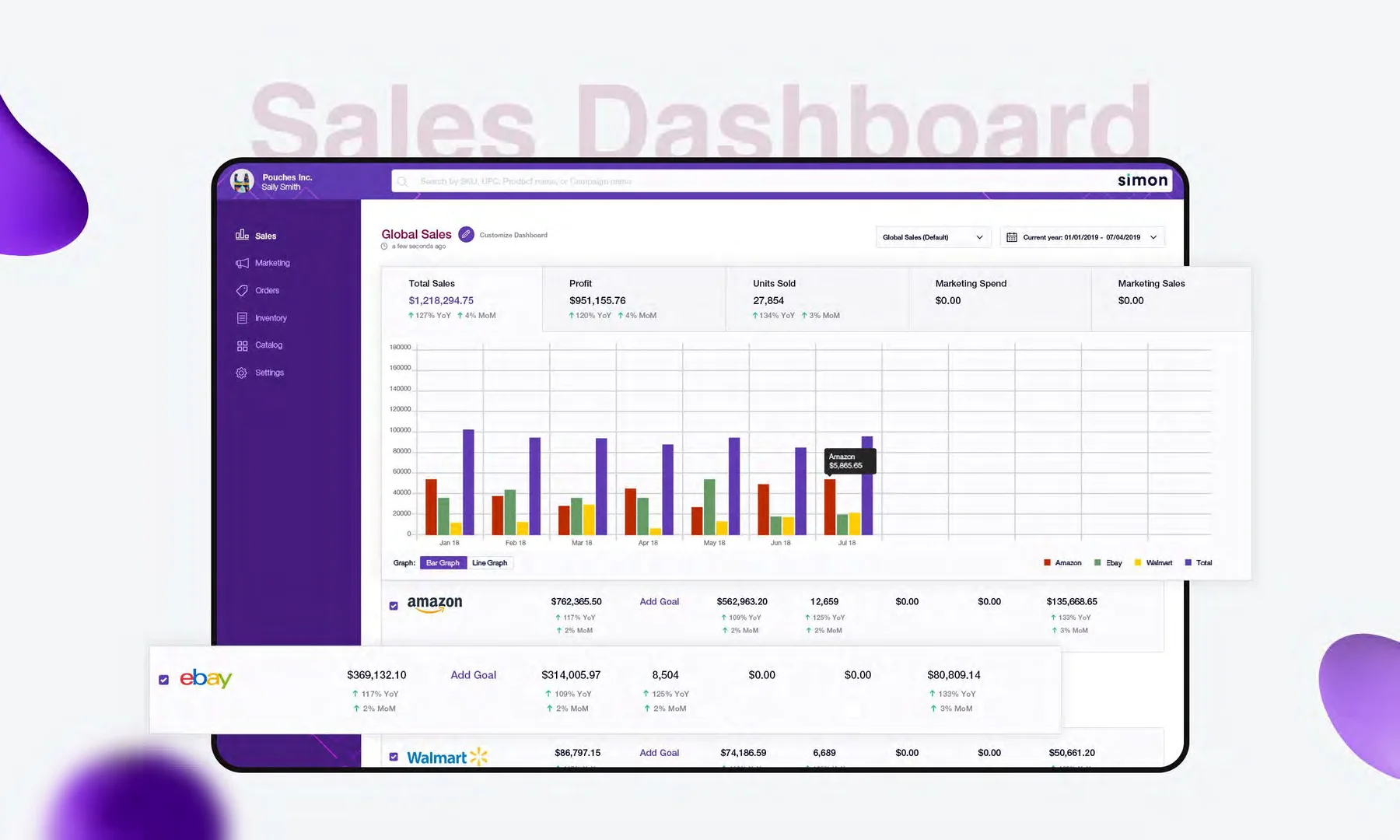
01 / The business context
Different seller worlds needed a common way to work.
The brief brought together sellers familiar with Amazon, Walmart, Shopify, Alibaba and eBay. Sales, advertising, products and orders needed a coherent relationship without reproducing every marketplace dashboard. There was also a critical dependency: Simon could show marketplace data only after a platform key had been registered and verified. The path to useful information began with setup.
02 / The strategic direction
Build a hierarchy of seller tasks, from connecting a marketplace to reading performance and acting on a record. Share interface conventions across modules while preserving the controls each task requires.
03 / From intent to execution
The decisions that shaped the work.
Make access to data understandable
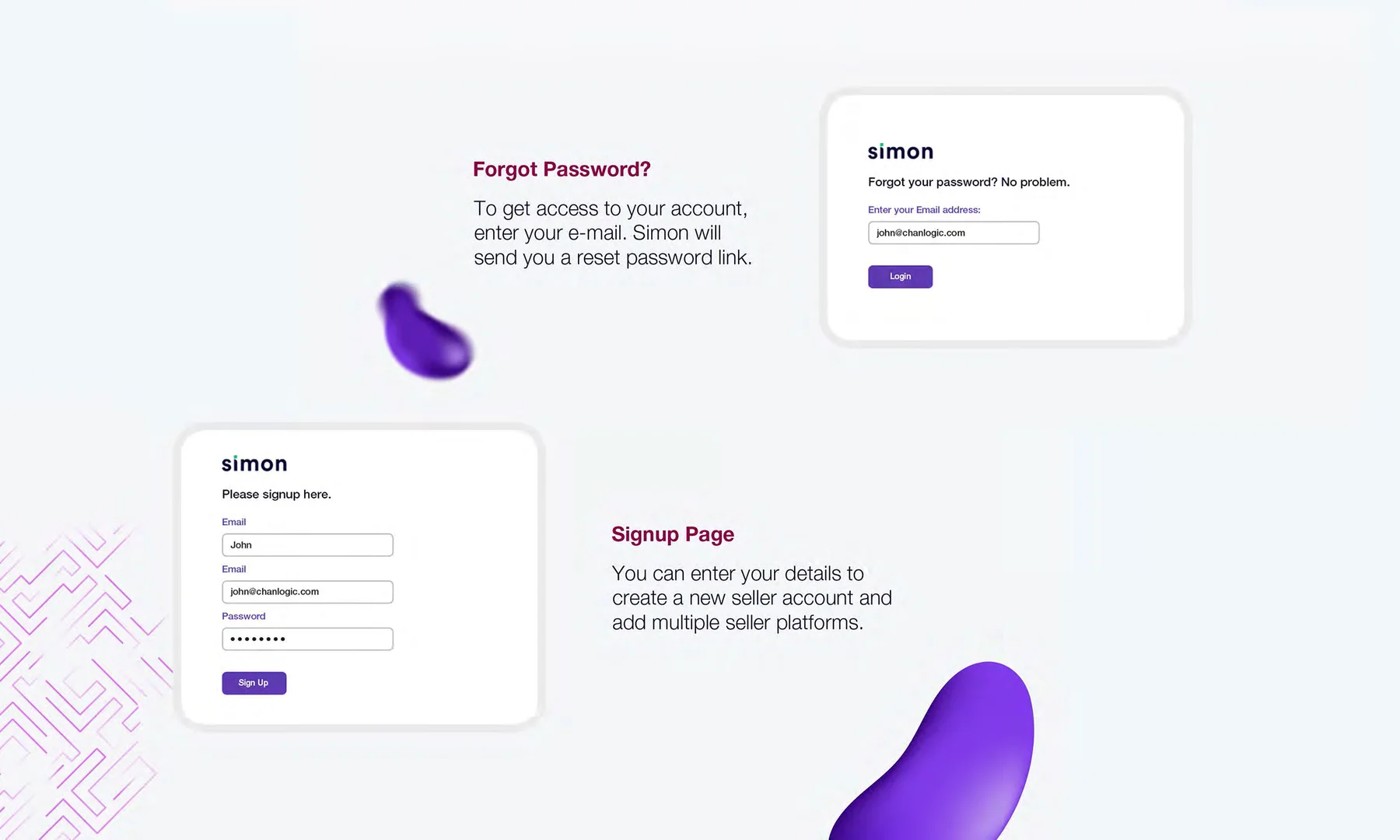
The onboarding requirement connected registration and sign-in with platform-key verification. Clear setup guidance and support messages were central to explaining why a seller's marketplace data was not yet available and what needed to happen next.
Connect overviews with operational depth
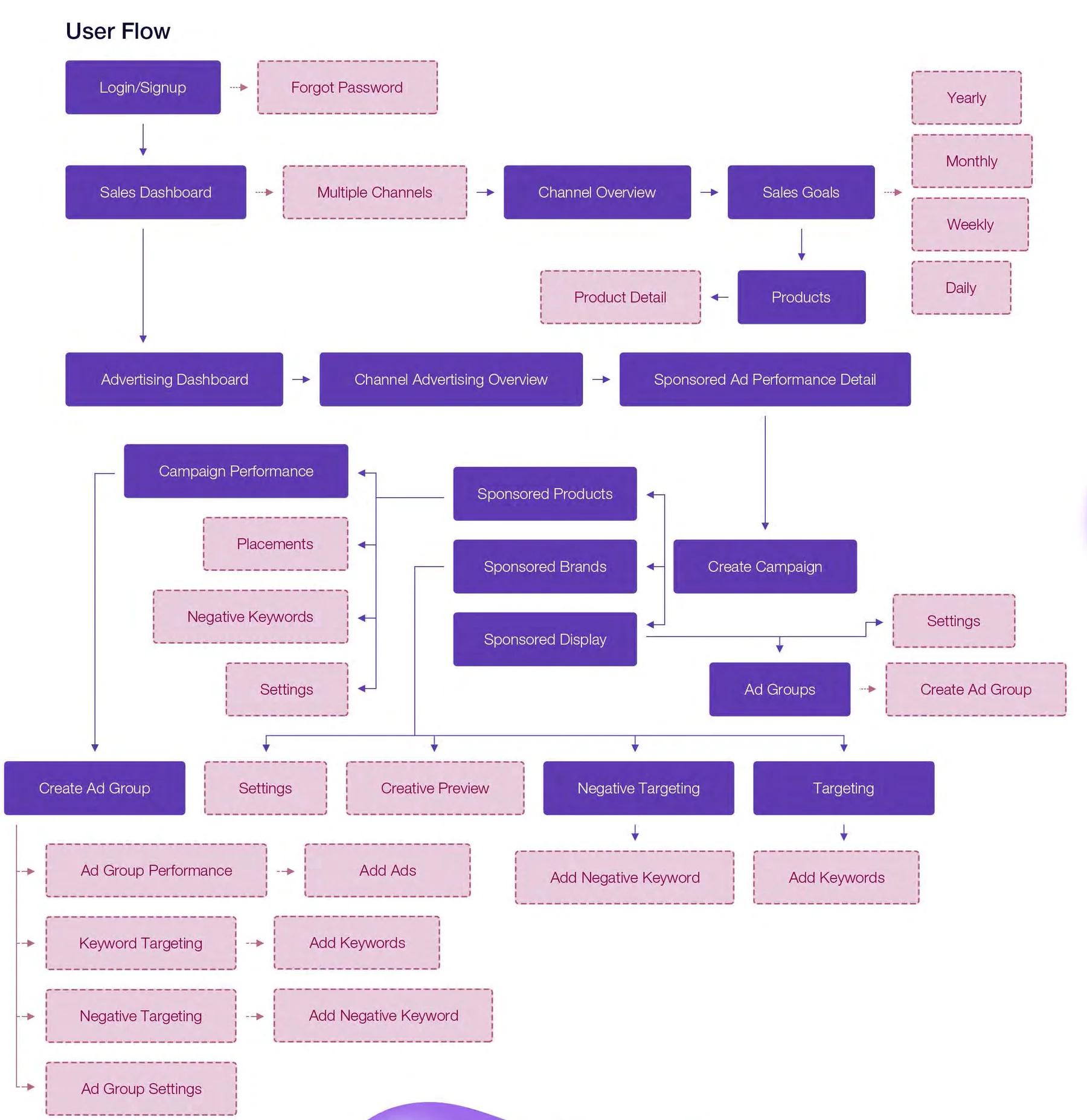
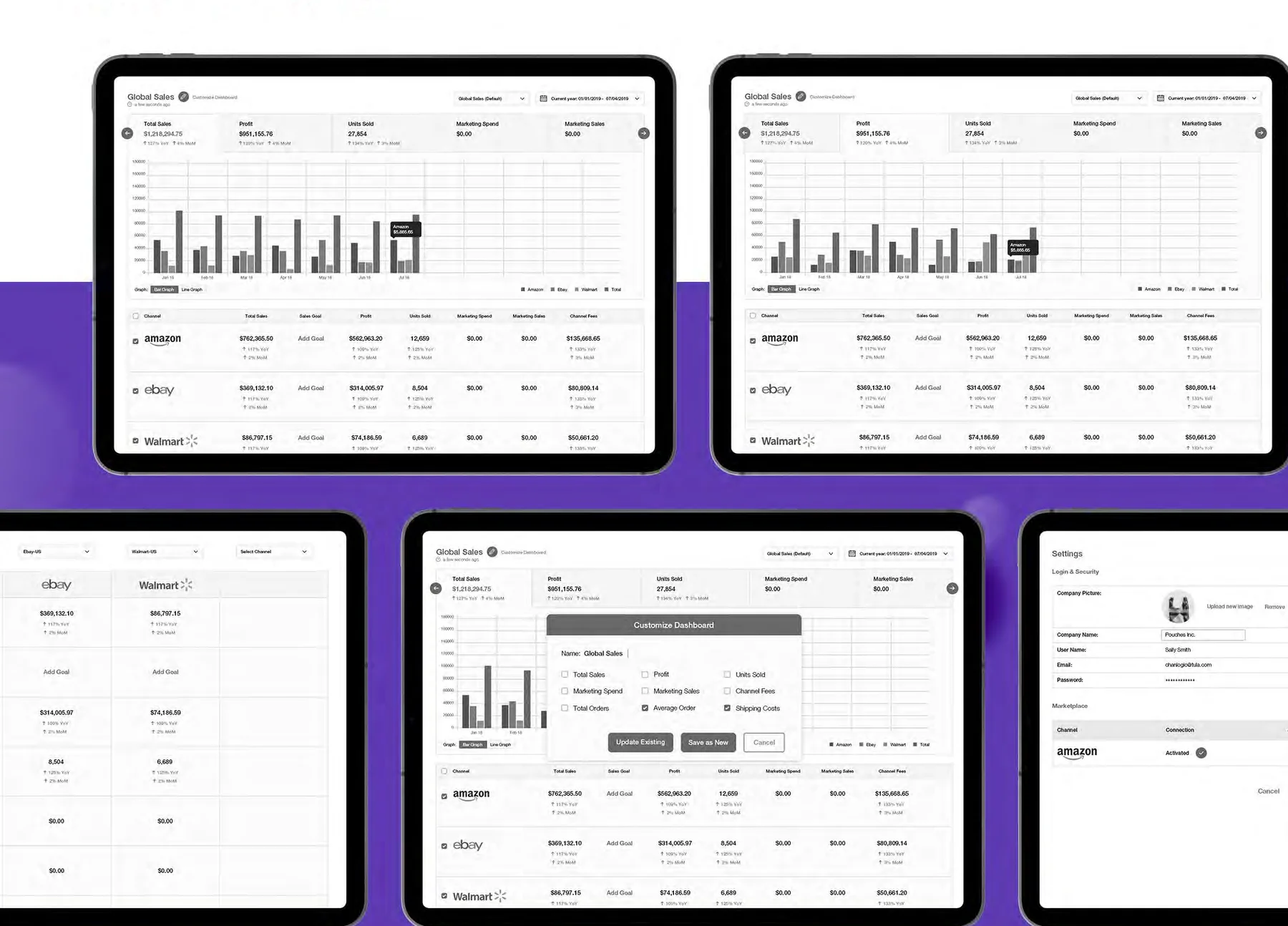
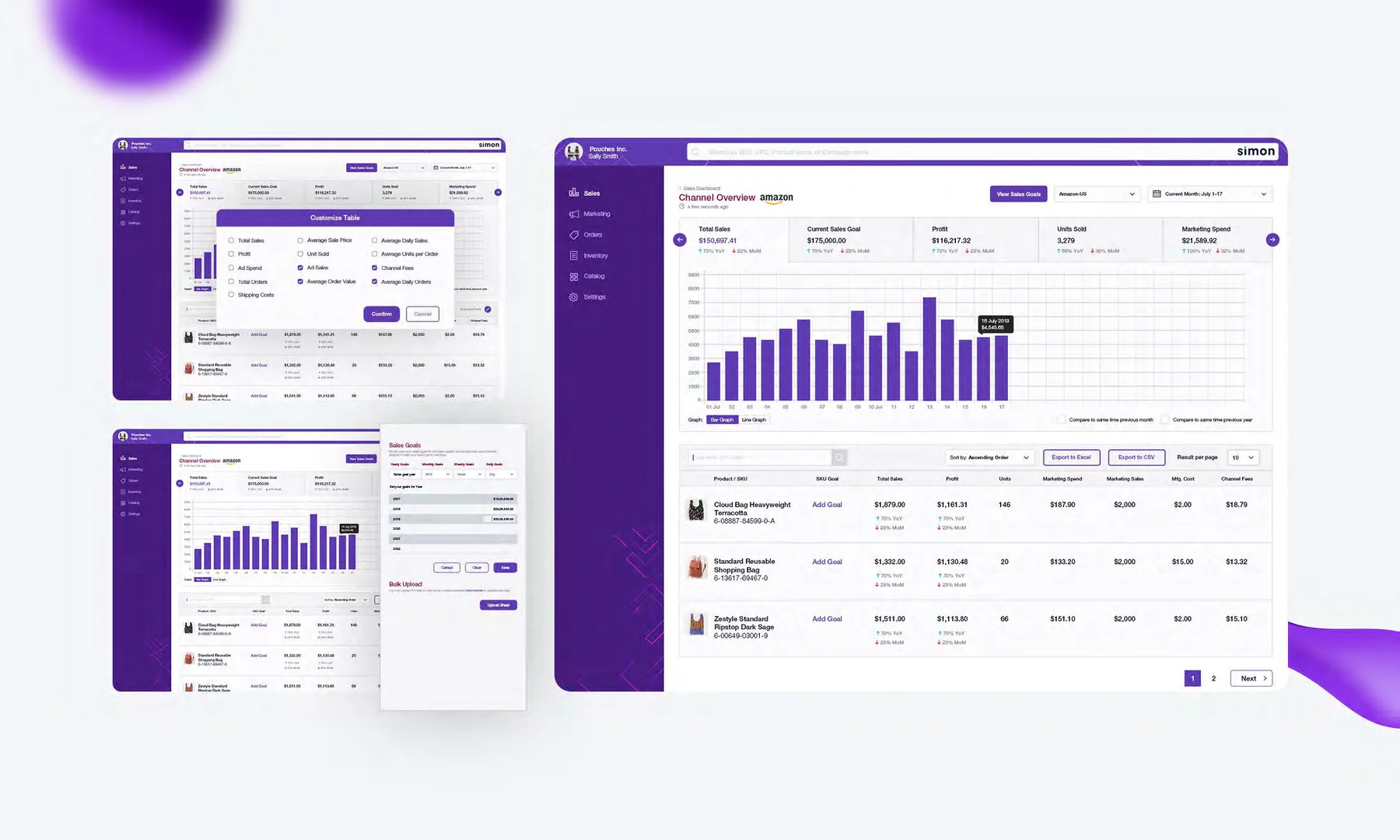
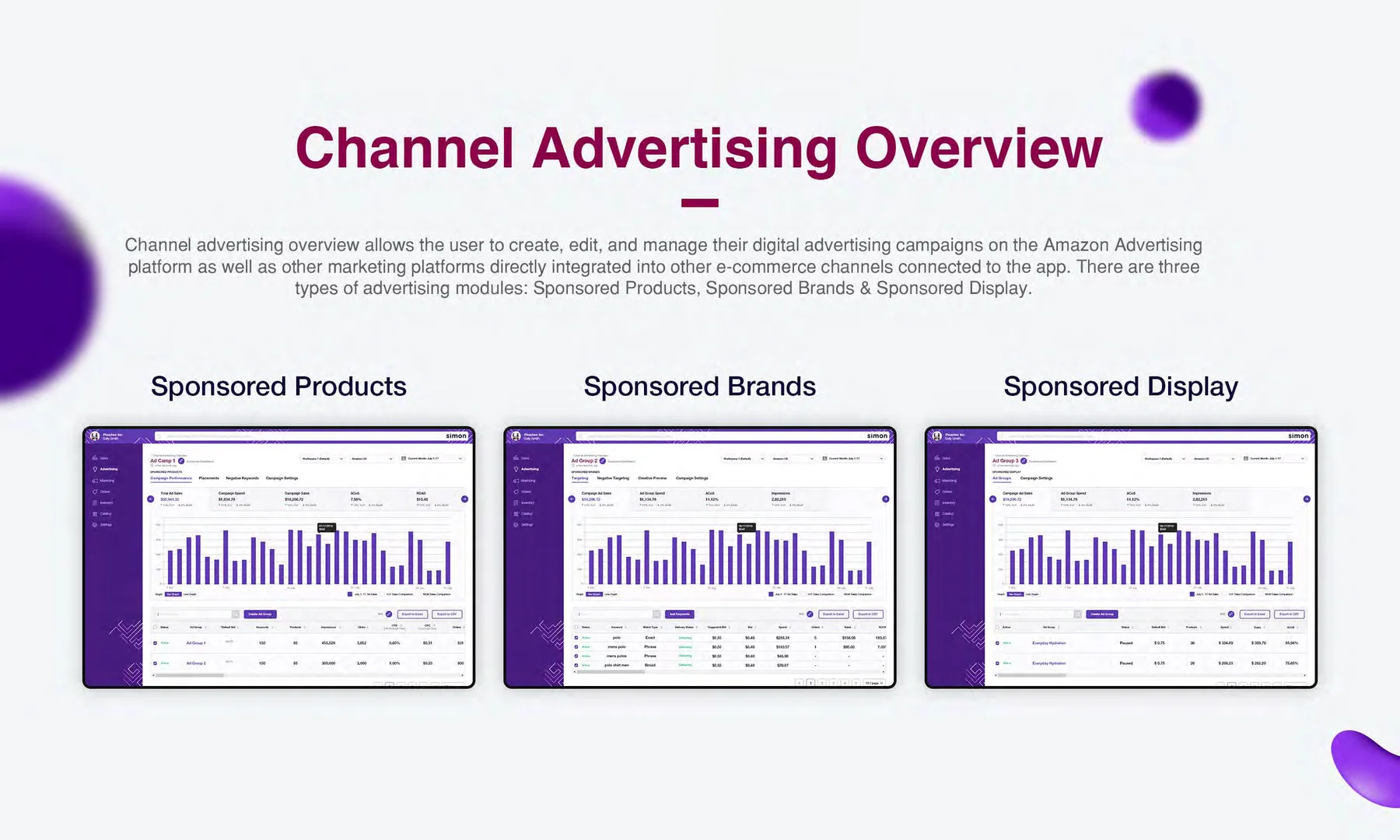
The task flow links sales overviews to goals and products, and advertising to formats, campaigns, ad groups and targeting. Wireframes establish a recurring order of navigation, controls, key figures, charts and records.
Keep the action close to the record
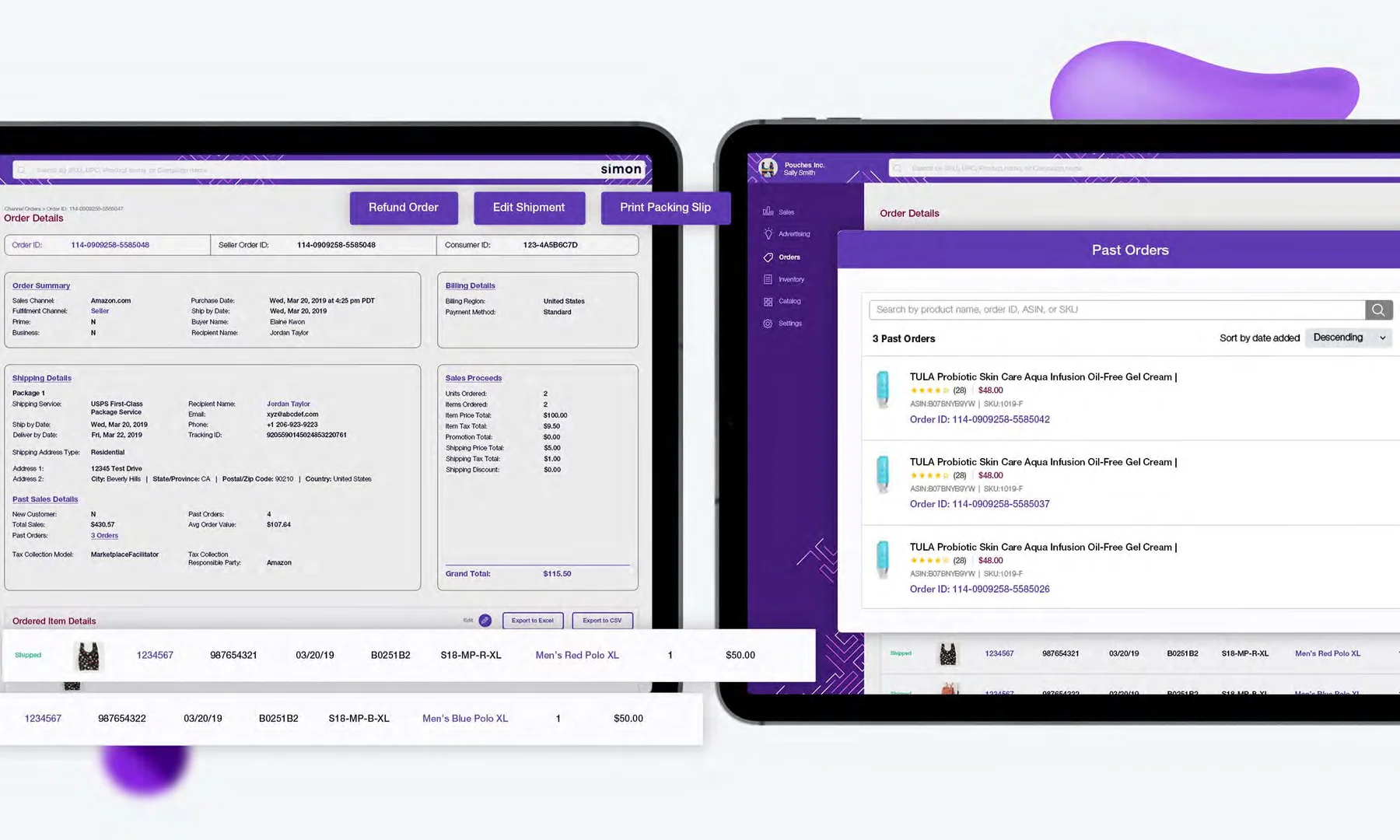
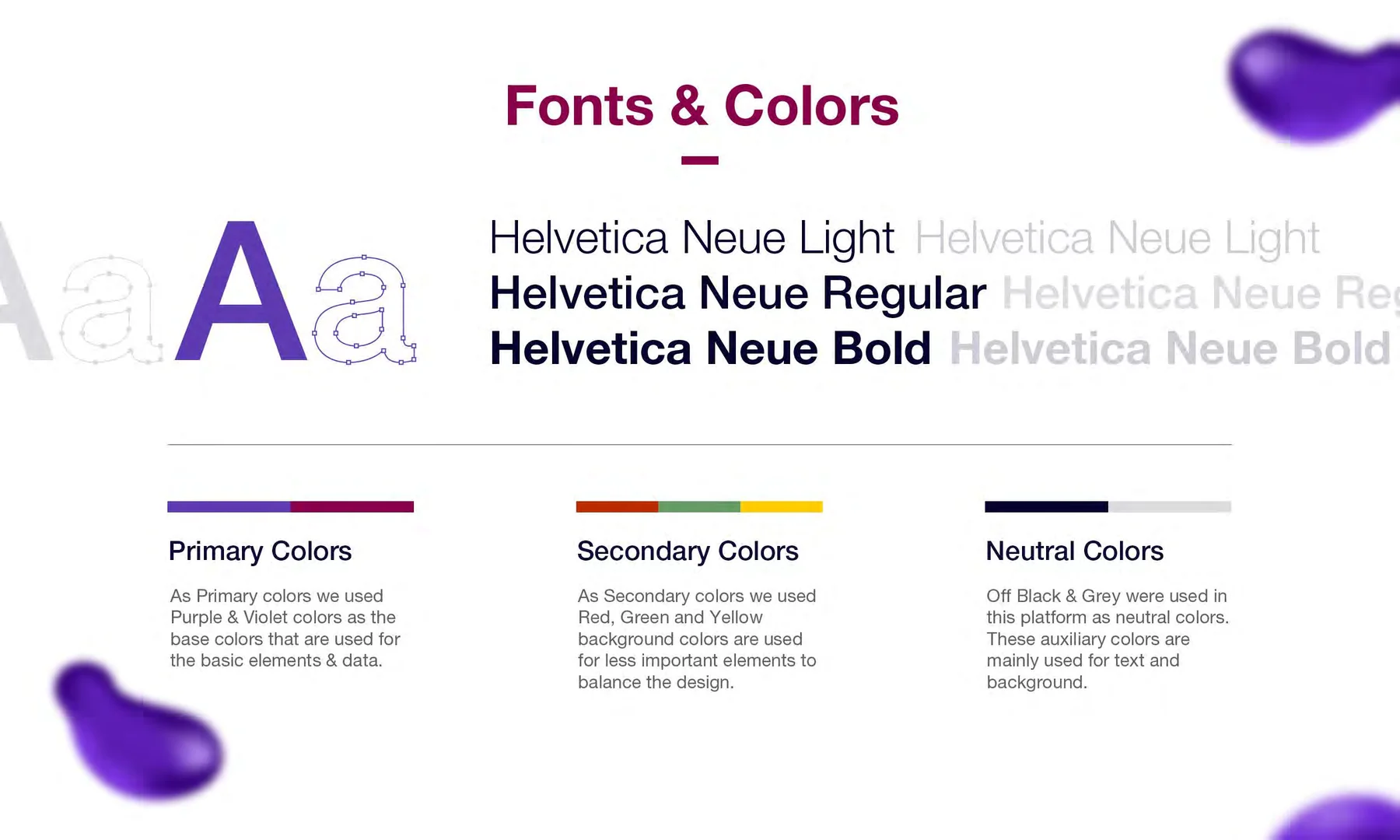
Order detail groups billing, shipment, sales proceeds and item information into distinct sections. Refund, shipment-editing and packing-slip controls sit alongside that context. Across modules, shared navigation, typography and table treatments make the screens read as one product.
04 / Selected project detail
See the thinking take shape.

05 / Delivery & outcome
Product UX and interface design documented.
The documented design connects account entry, sales analysis, advertising workflows and order operations. It includes task flows, low-fidelity studies and developed interface screens, supported by shared visual foundations across the product.
Based on the supplied Chanlogic / Simon case study and its original portfolio visuals. The evidence establishes design scope; it does not establish a production launch, revenue uplift or quantified usability improvement.
Your next chapter
Bring clarity to your next complex product.
Tell us about your audience, the challenge and what success needs to look like. We can help define the right scope.